Testing for both large and small scale projects
Walk-in Laboratory Tests
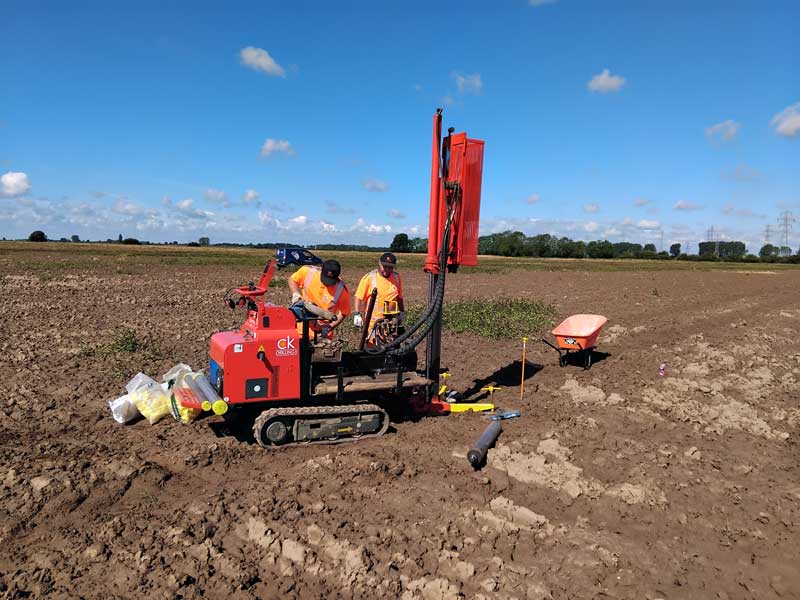
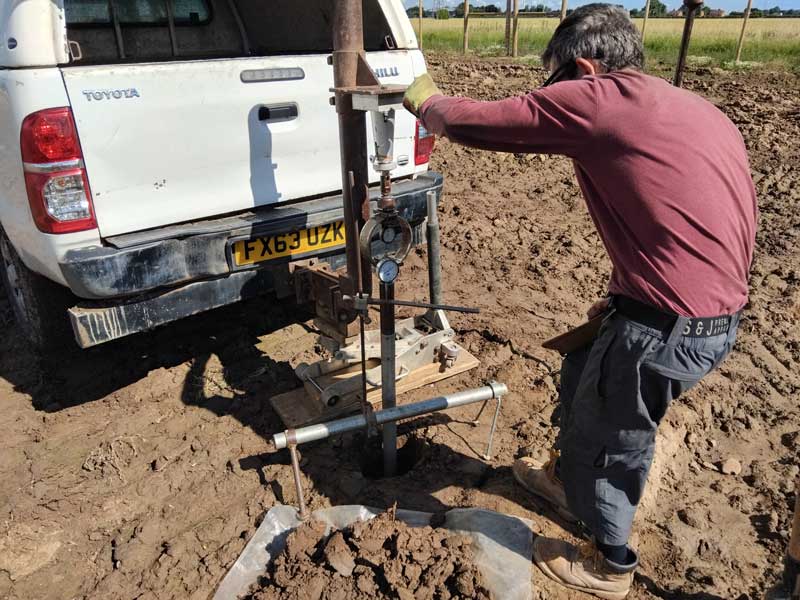
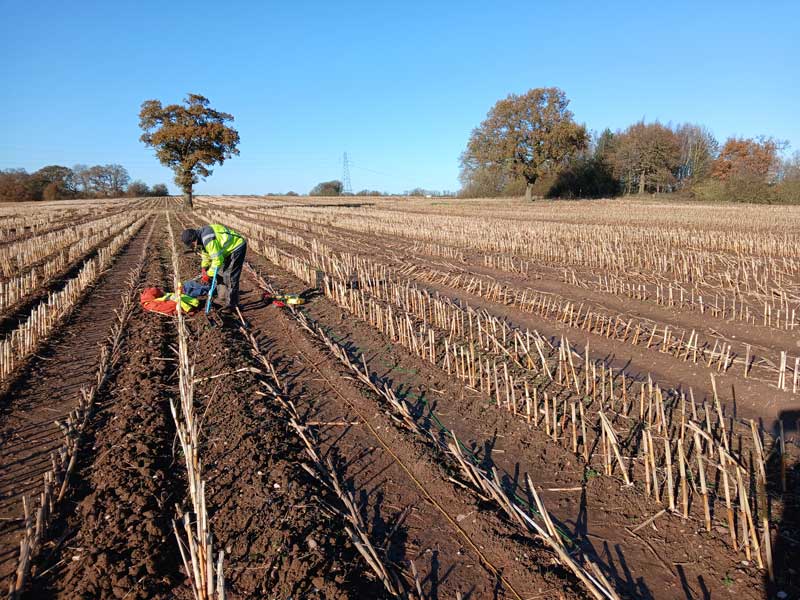
Peter Baxter Associates offers testing at scale for developers of housing estates and large projects but are pleased to also offer testing for small projects such as extensions and self builds.
Our charge is £75 per sample inclusive of VAT and the turnaround time is 10 days from receipt. This is based on the client taking the samples and posting or delivering them to our laboratory at ME8 6PL. We advise two samples per site, each of 1 kg weight, sealed in a zip freezer bag or similar labelled with the Site address. The sample depth should be advised by the project’s architect or building control officer, but in the absence of any guidance, must be at least 1m.
2nd Product title goes here
£72.00 (incl. VAT)
Short product description here – Soil shrinkability is determined by the Atterburg Limits tests detailed in British Standard BS EN ISO 17892-12. We are accredited by UKAS to carry out this test.
Soil shrinkability is determined by the Atterburg Limits tests detailed in British Standard BS EN ISO 17892-12. We are accredited by UKAS to carry out this test.
As the water content of a clayey soil increases, the behaviour changes from a crumbly solid to a mouldable plastic to a liquid, as can be experienced in everyday observations. The Atterburg limit tests measure the water content that the soil ceases to be a solid the Plastic Limit) and the water content at which the soil behaves as a liquid (the Liquid Limit). Water content is the ratio of the mass of water to the mass of dry solid, and is given as a percentage
The difference between these two numbers, which are expressed as percentages, is termed the Plasticity Index. The higher the plasticity index, the greater the shrinkability of the soil and the greater its potential to shrink and heave with changing water content.. NHBC Chapter 4.2 categorises soils based on their Modified Plasticity Indices, These categories, along with the proximity of trees, are used by designers to specify foundation depths for new building; Soils with the highest Modified Plasticity Indices require the deepest foundations.
A brief description of the tests are given here Link 1, and an edited video of the tests is given here Link to video
We have performed this testing at scale for developers of housing estates and large projects but are pleased to offer this testing for small projects such as extensions and self builds.
Our charge is £72 per sample inclusive of VAT and the turnaround time is 10 days from receipt.
This is based on the client taking the samples and posting or delivering them to our laboratory at ME8 6PL. We advise two samples per site, each of 1 kg weight, sealed in a zip freezer bag or similar labelled with the Site address. The sample depth should be advised by the project’s architect or building control officer, but in the absence of any guidance, must be at least 1m.
Photos of typical soils in SE England
References 7, 10, 9, 3, 2
To proceed please click on the Pay Now button, complete your name address and contact details, and post your samples. A VAT receipt for the testing will be generated online. The report information is listed here Link 2
As detailed elsewhere on our website, we offer a wide variety of other geotechnical and chemical tests both in house and subcontracted, and for small and large projects can undertake full ground investigations with factual and interpretative output. These ground investigations are quoted bespoke, please phone of email us with details for a quote.
Separate Page
Link 1 Briefly, the plastic limit test measures the water content at which the soil can be rolled into a 3mm diameter thread, and the liquid limit test measures the water content at which a specified steel cone drops 20mm into a soft mix. The soil samples are of course carefully prepared beforehand as specified in the Standard. This process involves drying, sieving out large particles, and grating the dried sample, prior to re wetting. We also measure the natural water content of the sample
Link 2 The report will state your name, address, site address if different, the natural water content, plastic and liquid limits, and the plasticity index, and percentage of soil smaller than 425 micron particle size, along with other information stipulated by the Standard. It will not give a volume change potential or any design information, which is for others to determine.